We're changing the way Sapphire looks
Same platform, new visual identity. Learn more: Sapphire is becoming NHMRC Grant Management System.
We're changing the way Sapphire looks
Same platform, new visual identity. Learn more: Sapphire is becoming NHMRC Grant Management System.
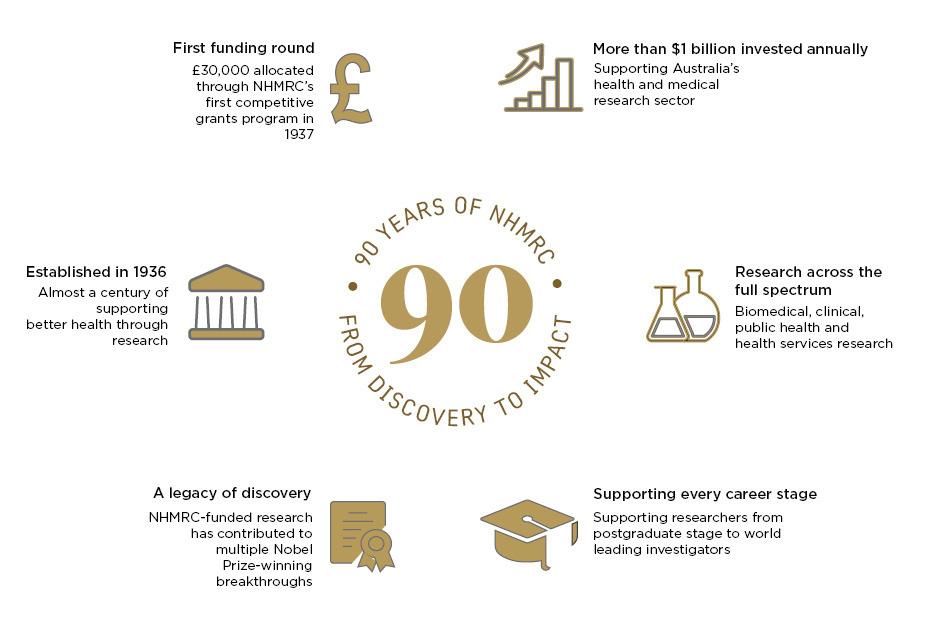
For 90 years, the National Health and Medical Research Council (NHMRC) has helped drive the health of Australians through investment in research, evidence and innovation.
Since its establishment in 1936, NHMRC has supported generations of researchers tackling some of the nation's biggest health challenges - from tuberculosis (TB) and polio to cancer, dementia, mental illness, antimicrobial resistance and emerging infectious diseases.
Across 9 decades, health priorities have changed dramatically. But what has remained constant is the need for rigorous evidence, bold ideas and researchers willing to pursue answers to some of the most complex questions in health and medicine.
Behind every breakthrough are the people who made it possible - those researchers who spent years testing new ideas, clinicians who translated discoveries into patient care, and consumers and communities who helped shape research priorities.
Over the past 90 years, NHMRC's role has expanded beyond funding research. Today, NHMRC supports health and medical research, develops evidence-based health advice, issues ethical guidance and helps ensure Australian health care is informed by the best available evidence.
When NHMRC was established in the 1930s, infectious diseases including TB, diphtheria and polio were major threats to Australian communities.
NHMRC's first Council session was held in Hobart, Tasmania in February 1937. Among its earliest priorities were TB, leprosy, child health and prevention of blindness. A standing committee on TB was established that year to coordinate national statistics, research and advice on one of the country's most significant public health threats.
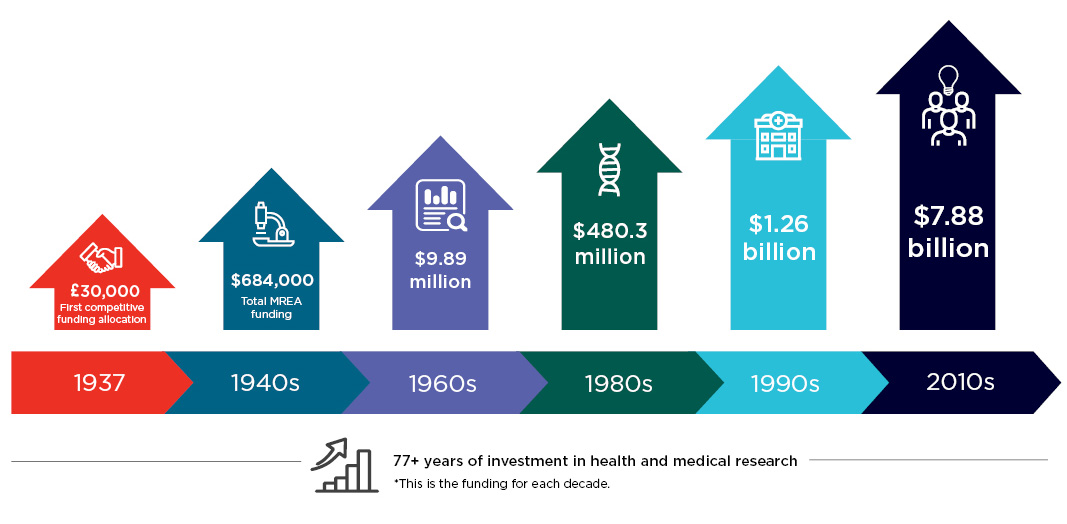
NHMRC also established a dedicated funding mechanism through the Medical Research Endowment Account (MREA), creating a long-term source of Commonwealth investment in health and medical research.
By 1938, NHMRC was funding 41 research projects across areas including bacteriology, biochemistry, clinical medicine, epidemiology, obstetrics and public health. One early project explored a mechanical respirator to resuscitate newborn babies, demonstrating the Council's commitment to research with potential clinical application.
NHMRC funding subsequently grew throughout the decades and the MREA reached $684,000 across the 1940s, despite the disruption and funding constraints of the Second World War.
Post-war Australia saw major advances in infectious disease prevention and treatment. NHMRC-supported research contributed to work on TB, including research into diagnosis and large-scale chest X-ray screening. At the same time, Australia's research system was growing. NHMRC funding reached almost $10 million across the 1960s, rising from $537,000 in 1960–61 to $1.87 million by 1969–70, and in 1966–67, annual funding exceeded $1 million for the first time.
NHMRC also began investing more deliberately in the people behind the research. Scholarships were introduced in 1968, building a national pipeline of researchers that continues today through NHMRC's career development and Postgraduate Scholarships funding schemes.
As infectious diseases came under greater control, chronic conditions became an increasingly important focus for Australian health research. Research into smoking and its links to cancer, cardiovascular disease and other illnesses helped build the evidence base for public health measures that contributed to dramatic declines in smoking rates and improved health outcomes across the population.
Australian researchers also made major contributions to immunology, cardiovascular disease and cancer, as well as reproductive and child health. Sir Frank MacFarlane Burnet whose pioneering work in immunology helped advance understanding of the immune system, and Professor Fiona Stanley AC, whose research into maternal and child health influenced health policy and practice across Australia.
By the 1970s and 1980s, Australian health research was increasingly focused on the prevention and treatment of chronic disease, while new threats emerged. HIV/AIDS presented an unprecedented public health challenge in the 1980s. Australian researchers responded rapidly, contributing to international advances in HIV prevention, treatment and epidemiology.
NHMRC used targeted funding to respond to emerging priorities, including HIV/AIDS, through its ‘Special Initiative Grants’ program. These grants provided focused investment in areas requiring a rapid national research response.
Researchers including Professor John Kaldor AO and Professor Andrew Grulich AO, associated with the Kirby Institute, have since contributed to Australia's world-leading HIV research, including work underpinning prevention strategies such as treatment as prevention and pre-exposure prophylaxis.
NHMRC's investment expanded significantly throughout the 1980s, reflecting the growing scale and ambition of Australia's health and medical research sector.
By the 1990s, NHMRC had become a major pillar of Australia's health and medical research system. Annual funding surpassed $100 million for the first time in 1992–93, reaching $105.15 million, with total funding across the decade of $1.26 billion. This period also saw a growing emphasis on research excellence, collaboration and translation.
In 1996, NHMRC established its Centres of Research Excellence program, supporting multidisciplinary research teams tackling complex health problems over longer periods. That same year, Professor Peter Doherty AC shared the Nobel Prize in Physiology or Medicine for research into how the immune system recognises virus infected cells. The decade also saw major advances in mental health research – an important investment for Australians.
Professor Patrick McGorry AO's work in early intervention for psychosis helped change approaches to mental health care, particularly for young people, and contributed to a broader shift towards early intervention and evidence-based treatment.
The 2000s brought growing research investment in chronic disease, obesity, diabetes, cancer, genomics and precision medicine. It was also a decade that demonstrated the global impact of Australian health research.
Professors Barry Marshall AC and Robin Warren AC were awarded the 2005 Nobel Prize in Physiology or Medicine for their discovery of the role of Helicobacter pylori in peptic ulcer disease. Their pioneering research was supported by NHMRC funding, including research undertaken at the University of Western Australia and Royal Perth Hospital, as well as NHMRC fellowships and project grants. Their discovery transformed the treatment of peptic ulcer disease, showing that a condition once considered chronic could be treated with antibiotics.
As the life expectancy grew in Australia, dementia became an increasingly urgent health challenge. NHMRC significantly expanded its investment in dementia research through the Australian Government's Boosting Dementia Research Initiative, which invested $200 million between 2014 and 2019 to accelerate research and build national research capability.
Since 2015, NHMRC has awarded more than $518 million in direct funding to 459 dementia research projects. Researchers including Professor Sharon Naismith and Professor John Hodges have contributed to Australia's research effort in dementia, ageing, diagnosis and cognitive health.
The broader scale of NHMRC investment also continued to grow and research funding reached $7.88 billion across the 2010s - the largest decade total in NHMRC's history.
During this period, NHMRC also redesigned its grant program, introducing Investigator Grants, Ideas Grants and Synergy Grants to better support researchers across career stages and encourage high-quality, collaborative research.
Beyond research funding, NHMRC has helped shape Australian healthcare through evidence-based guidelines, ethical frameworks and health advice that underpin clinical practice, research integrity and public health policy.
During the COVID-19 pandemic, NHMRC rapidly mobilised research funding to support projects investigating diagnostics, treatments, vaccine responses, health system impacts and community health outcomes. The pandemic highlighted the value of sustained investment in research capability, demonstrating that rapid responses are only possible because expertise, infrastructure and research networks have been built over decades.
Today, NHMRC-funded researchers are addressing challenges including antimicrobial resistance, dementia, mental health, chronic disease, Indigenous health, climate-related health impacts, emerging infectious diseases and health system innovation. Research is also changing rapidly, with advances in genomics, artificial intelligence, precision medicine and data science creating new opportunities to prevent, diagnose and treat disease.
In 2026, NHMRC awarded $10.5 million to 5 research teams through its Global Alliance for Chronic Diseases funding call to investigate ways of improving health systems and reducing the impact of chronic disease, including research focused on culturally safe smoking and vaping cessation care for Aboriginal and Torres Strait Islander mothers and babies.
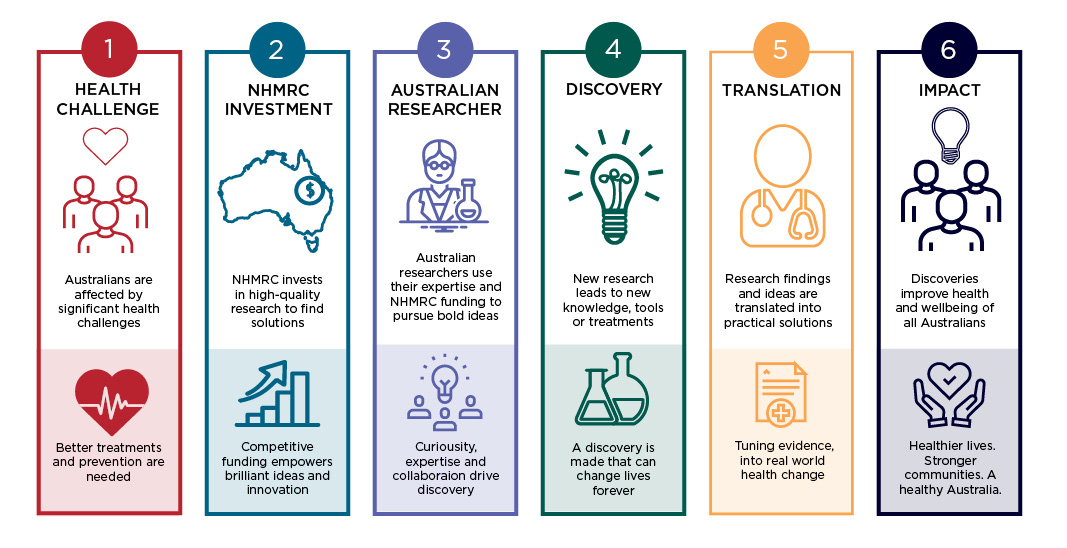
The questions facing researchers may look different from those of 1936, but the purpose remains remarkably similar: generate reliable evidence, support discovery and translate research into better health outcomes.
For 90 years, NHMRC has invested in the people, ideas and discoveries that have improved the health of Australians. From driving progress against infectious diseases in the 1930s to supporting research into genomics, AI and precision medicine today, NHMRC has helped build one of the world's strongest health and medical research systems.
The challenges facing Australia will continue to evolve, new diseases will continue to emerge, the population will age and advances in technology will transform the way healthcare is delivered – what will not change is the need for high-quality evidence and the researchers who generate it. After 90 years, NHMRC remains committed to backing the people behind the breakthroughs that will improve health outcomes for generations to come.